
December 12, 2025 | By admin
Selecting a mattress isn’t just a matter of comfort or luxury — it’s a health decision that can influence spinal health, nerve pressure, muscle relaxation, sleep quality, and day-to-day mobility. With so many brands advertising “orthopaedic” mattresses, many people wonder who actually needs one and whether doctors truly recommend them. This article offers doctor-approved insights and research-based guidance to help you decide if an orthopaedic mattress is right for you.
What do doctors mean by an “orthopaedic mattress”?
Unlike a medical device or pharmaceutical product, there is no universal legaldefinition of an orthopaedic mattress. In clinical practice, doctors and physiotherapists evaluate a mattress by what it does, not what it is called. A mattress may be considered orthopaedic if it:
These characteristics make it more of a medical grade mattress for spine health rather than just a “firm” or “expensive” sleeping surface.
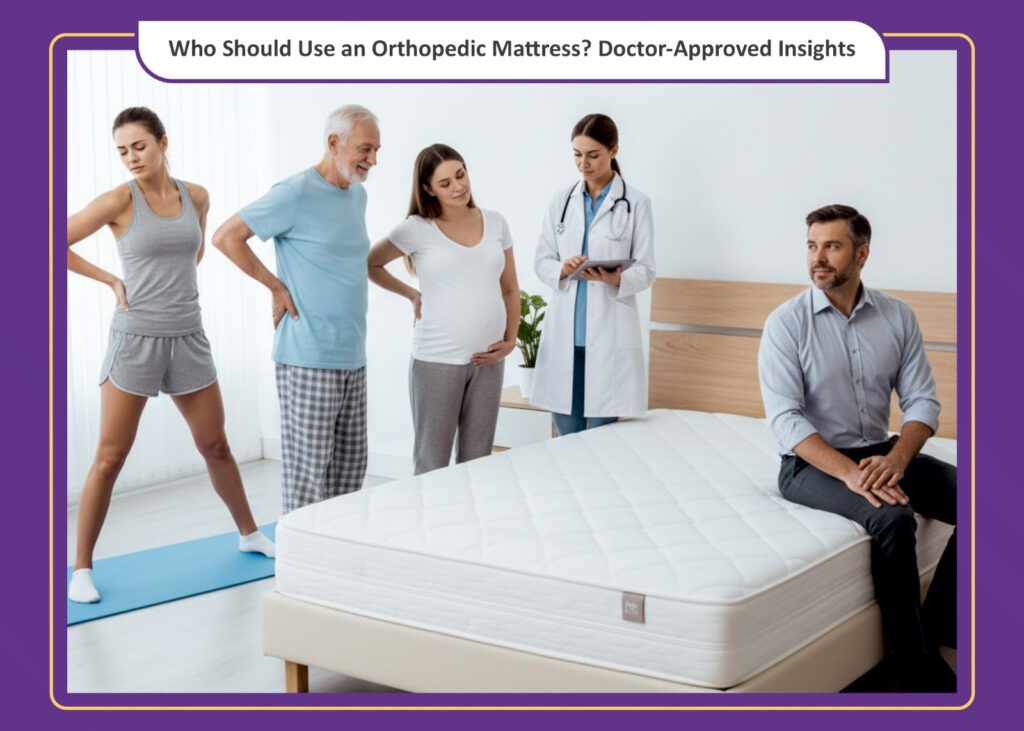
Who should use an orthopaedic mattress? — Doctor-approved indications
Based on clinical research and physiotherapy guidelines, the following groups are most likely to benefit.
1. People with chronic non-specific low back pain
Multiple studies show that switching to a medium-firm supportive mattress significantly reduces pain and improves sleep for chronic back pain sufferers. This supports the use of an orthopaedic mattress for back pain, particularly when pain is mechanical rather than due to major disease.
2. Individuals over 50 experiencing morning stiffness
Age-linked changes — arthritis, cartilage degeneration, and reduced tissue elasticity — often cause morning back and joint pain. An orthopaedic mattress can improve sleep quality by reducing joint compression and supporting natural spinal curves.
3. People with poor posture or spinal misalignment
Office workers, drivers, and people leading sedentary lifestyles may unknowingly sleep in a way that worsens slouching and spinal curvature. A mattress engineered for posture correction can prevent further strain overnight.
5. Post-injury or post-operative patients (only under medical advice)
Some surgeons recommend orthopaedic mattresses after spinal or hip surgery to support the healing process, though this must be prescribed on a case-specific basis.
When to switch to an orthopaedic mattress
Signs you may need a doctor-recommended mattress for spine support include:
If these apply, your body might benefit from orthopaedic spinal support at night.
The bottom line — is an orthopaedic mattress right for you?
An orthopaedic mattress can be a doctor-recommended mattress for spine health, especially if you experience:
However, it is not a cure-all. In complex medical cases, a mattress should complement — not replace — professional treatment.
Leave a Reply