
December 12, 2025 | By admin
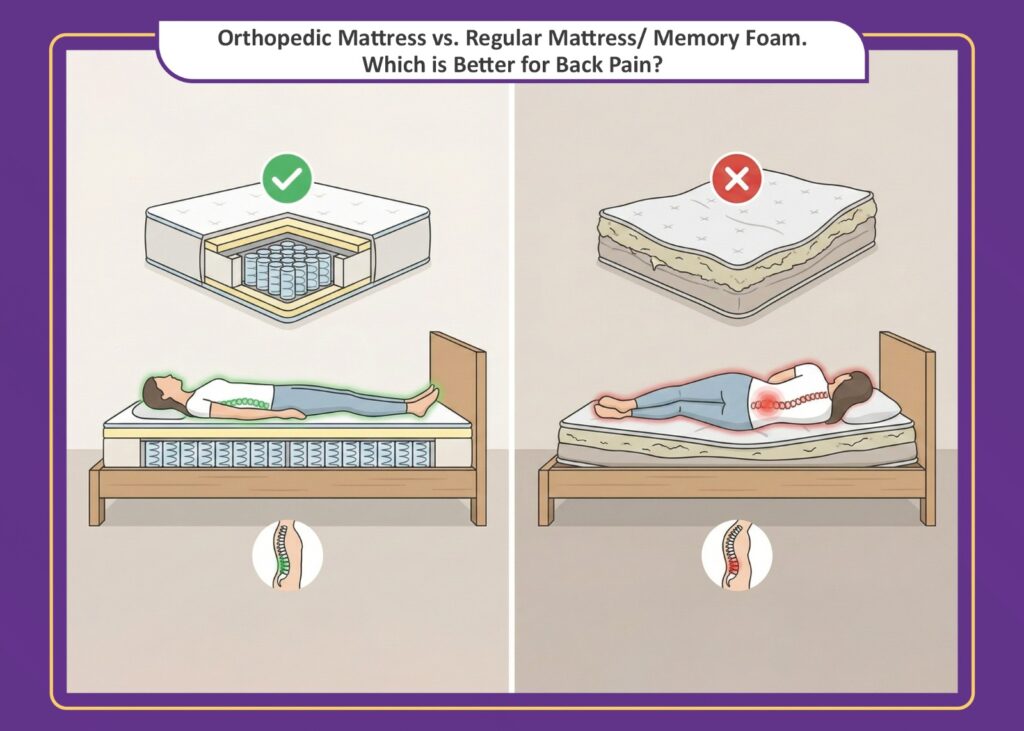
Back pain is one of the most common reasons people change mattresses. But the answer to “Which mattress is clinically proven for back pain?” is less about brand labels and more about support, pressure distribution and personal sleep posture. To understand whether an orthopaedic mattress for back pain performs better than a regular or memory-foam mattress, we need to break down what each really offers and what the research says.
What people mean by “orthopaedic mattress”
“Orthopaedic” (or “orthopaedic”) mattresses are marketed as being designed to support the spine, joints and musculoskeletal system — usually implying firmer support and enhanced posture correction. But here’s the critical part many buyers don’t know:
There is no universally accepted medical standard that defines when a mattress can be called “orthopaedic.” The term is largely used as a marketing label.
This doesn’t mean all orthopaedic mattresses are bad, only that shoppers should look beyond the label and check actual construction, firmness and support zones.
Memory-foam and regular mattresses — the difference
Memory-foam mattresses:
Whereas Regular/innerspring mattresses:
And Hybrid mattresses combine coils and memory-foam or latex, providing both responsiveness and pressure relief.
Orthopaedic mattresses may fall into any of the above categories — foam, coil, latex or hybrid — the label only implies “stronger support,” and not a specific build.
What research suggests
A growing body of research helps answer whether orthopaedic mattresses are better for back pain:
Systematic reviews repeatedly show that medium-firm mattresses tend to provide the best outcomes for people with lower-back pain — offering spinal alignment without creating pressure points.
Clinical trials have shown that switching to a supportive mattress can:
Some studies tested mattresses marketed as “orthopaedic,” but improvements were tied to the design and firmness, not the label.
Even the best research findings come with a caveat: the optimal mattress varies by
A medium-firm memory-foam mattress may work for one person and not for another.
Use of an orthopaedic mattress — what it actually does
A well-designed orthopaedic mattress for back pain is used to:
In cases of severe or persistent back pain, even mattresses marketed as “orthopaedic” may not provide significant relief. When there is an underlying medical condition affecting the spine, relying solely on mattress claims can lead to disappointment. In such situations, it is best to consult a doctor, physiotherapist, or certified mattress expert who can recommend the right level of firmness and support based on your specific diagnosis and sleeping posture. This ensures comfort, therapeutic benefit, and most important
Leave a Reply