
November 3, 2025 | By admin
Sleep is essential to our health, but the way we sleep — and the products we use — also has an impact on the environment. From foam production to transportation and disposal, traditional mattresses contribute significantly to the carbon footprint. Today, however, mattress brands worldwide are rethinking production and material choices to go green, combining comfort with sustainability and helping reduce the environmental burden.
What It Means to “Go Green” in Mattress Manufacturing
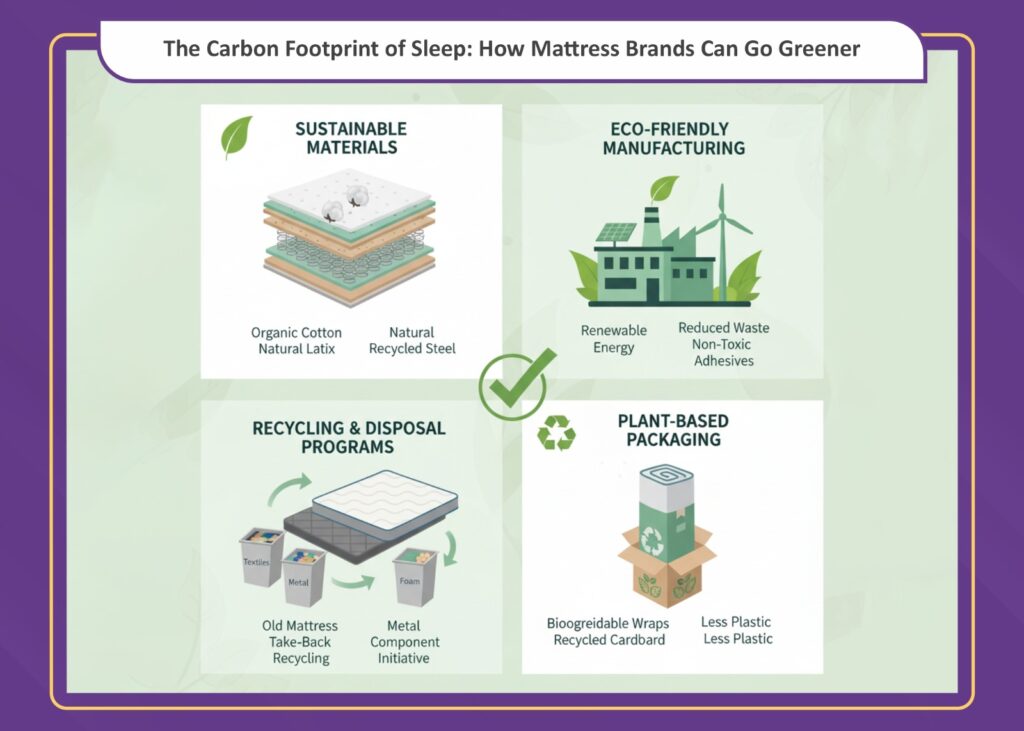
Going green refers to practices that minimize environmental harm while promoting resource efficiency. For mattress brands, this includes using sustainable materials, reducing carbon emissions, and implementing eco-friendly manufacturing processes. Some key green initiatives include:
By adopting these practices, mattress companies not only lower their environmental footprint but also appeal to increasingly eco-conscious consumers who care about sustainability.
The Role of Sustainability in the Mattress Industry
Sustainability is a strategic approach that benefits the industry, consumers, and the planet. Here’s how:
Reducing Waste: Millions of mattresses end up in landfills each year. Sustainable designs encourage recyclability or repurposing, reducing waste and soil contamination.
Lowering Carbon Emissions: Eco-friendly materials and energy-efficient manufacturing reduce the overall carbon footprint of sleep, from production to disposal.
Promoting Longevity: High-quality, durable, and sustainable mattresses last longer, decreasing the frequency of replacement and conserving resources over time.
Industry Leadership: Brands that adopt green practices set standards for competitors, fostering a more environmentally responsible industry overall.
Consumers increasingly seek products that align with their values. Brands offering eco-friendly mattresses can differentiate themselves while helping customers make choices that positively impact the planet.
Examples of Green Mattress Innovations
Several brands have embraced sustainability with innovative products:
The carbon footprint of sleep is real, but it’s also manageable. By choosing sustainable materials, reducing waste, and implementing energy-efficient practices, mattress brands can significantly reduce their environmental impact. Going green is not just about corporate responsibility — it’s about reshaping the entire mattress industry, helping consumers make environmentally friendly choices, and preserving the planet for future generations.
Leave a Reply