
July 17, 2026 | By admin
Sciatica is a sharp, debilitating pain that radiates along the sciatic nerve, traveling from the lower back through the hips, buttocks, and down each leg. In India, with changing urban lifestyles, prolonged sitting at office desks, and a rise in sedentary habits, sciatica and chronic lower back pain have become increasingly common.
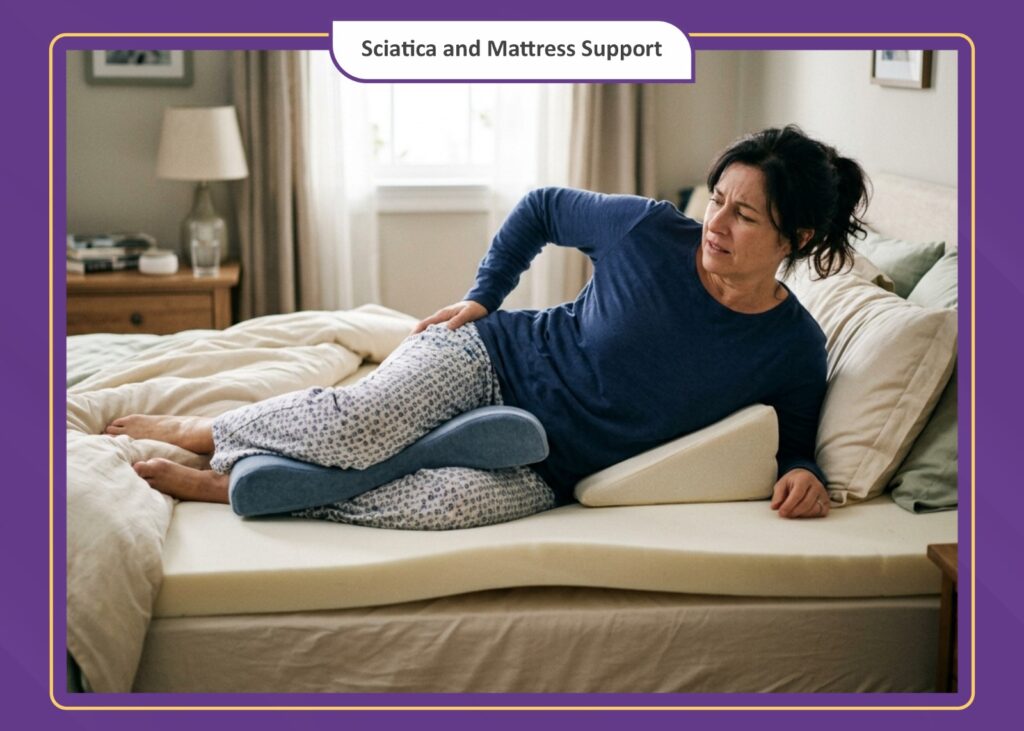
When managing sciatic nerve pain, your sleeping surface plays a critical role. A mattress that sags or lacks structure forces the spine into unnatural curves, compressing joints and aggravating nerve pathways. To achieve deep sleep and allow back muscles to relax, choosing a scientifically designed sleeping surface is paramount.
Here is what orthopaedic and physiotherapy research suggests for managing sciatica through proper mattress support, tailored for Indian households.
What the Research Says: Decoding Orthopaedic Support
When shopping for bedding in India, consumers are flooded with options labelled “orthopaedic.” However, medical and sleep experts point out an important fact:
Clinical Reality: There is No universally accepted medical or legal standard that defines an “orthopaedic mattress”. The term is often misused for marketing purpose. In clinical practice, physiotherapists evaluate a mattress by its functional performance rather than its marketing tag. A mattress provides authentic orthopaedic value if it:
The Ideal Firmness Level: Avoid the “Hard Bed” Myth
A common traditional belief in Indian households is that a rock-hard floor or an ultra-firm coir mattress is best for back pain. Clinical research explicitly disproves this.
Systematic reviews and clinical trials repeatedly demonstrate that medium-firm mattresses yield the best outcomes for lower back pain and stiffness. An overly hard mattress creates high-pressure zones under the shoulders and pelvic region, which can intensify sciatic nerve irritation. Conversely, an overly soft mattress causes the pelvis to sink deeply, distorting natural lumbar curves.
Comparing Your Options: Full Mattress vs. Ortho Topper
Investing in a premium orthopaedic setup can be a financial commitment, especially with localized costs like customized sizing for carpenter-made Indian beds. Depending on your budget and existing bed condition, you have two primary expert-backed routes:
1. Special Board Orthopaedic Mattresses
A full orthopaedic mattress engineered with high-density foam, latex, or multi-zone support systems offers superior, full-body correction. Advanced models feature zoned support systems—meaning they are firmer around the heavy lumbar region and softer under the shoulders, keeping the spine aligned.
2. High-Density Ortho Toppers
If your current mattress is relatively new and structurally flat but lacks the required contouring or firmness, an ortho topper is an excellent, cost-effective alternative. A 2-to-4-inch orthopaedic mattress topper made from high-density memory foam or latex cushions high-pressure areas like the hips and lower back, offering targeted pressure relief at a fraction of the cost.
Conclusion
A supportive, medium-firm sleeping surface can significantly reduce morning stiffness, mitigate nerve pressure, and improve sleep quality. However, sciatica can stem from various underlying medical issues like disc bulges or slip-discs. A mattress is a therapeutic aid, not a medical cure. If your sciatic pain is severe or persistent, always consult a medical specialist or physiotherapist alongside optimizing your sleep environment.
Leave a Reply