
November 14, 2025 | By admin
Most people think of sleep as downtime — a period when the body and brain simply rest. But neuroscientists now know that while you sleep, your brain is wide awake in its own way, hard at work cleaning itself through a remarkable network known as the glymphatic system.
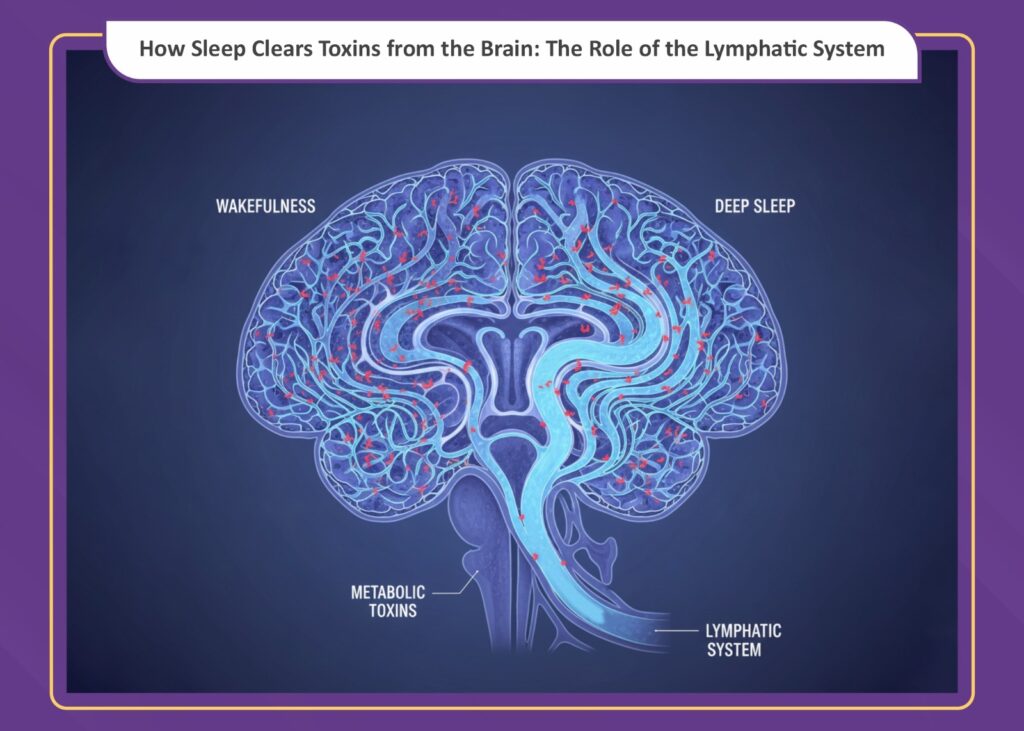
Recent research shows that the glymphatic system and sleep are deeply interconnected. This intricate system acts like the brain’s “cleaning crew,” clearing out metabolic waste and neurotoxins that build up during waking hours. During deep sleep and brain cleansing processes, brain cells shrink by nearly 60%, allowing cerebrospinal fluid (CSF) to flow more freely and flush out harmful debris.
How Sleep Detoxifies the Brain
A groundbreaking 2013 study published in Science by Maiken Nedergaard and Lulu Xie at the University of Rochester provided the first visual evidence of how sleep detoxifies the brain. Using advanced imaging in mice, they discovered that waste clearance almost exclusively occurs during sleep — not while awake.
When the brain is asleep, the glymphatic system becomes up to 10 times more active. CSF flows through brain tissue, removing byproducts such as beta-amyloid — the sticky protein linked to Alzheimer’s disease. But when sleep is cut short or disrupted, this cleansing process slows down dramatically, leaving behind toxins that may contribute to long-term cognitive decline.
The Hidden Cost of Sleep Deprivation
Skipping sleep isn’t just about fatigue — it’s a direct threat to brain health. A 2018 study published in PNAS (Proceedings of the National Academy of Sciences) revealed that even one night of sleep deprivation can significantly increase beta-amyloid levels in the brain.
People who routinely sleep fewer than six hours per night have been shown to accumulate higher concentrations of these toxic proteins, increasing their risk of Alzheimer’s and other neurodegenerative conditions. Simply put, when sleep is compromised, the glymphatic system cannot perform its nightly cleaning duties effectively — and the brain suffers the consequences.
In essence, good sleep isn’t just restorative rest — it’s essential brain hygiene.
How to Support Your Brain’s Nightly Detox
Experts suggest simple, science-backed habits to optimize the glymphatic system and promote efficient brain detoxification during sleep:
Finally, Your brain and body recognize comfort. When your mattress feels just right, it reduces micro-awakenings (those brief wake-ups you may not even notice). A comfortable, high-quality mattress helps you stay asleep longer and wake up feeling truly refreshed.
If you wake up tired despite going to bed early, your mattress could be the reason. It might be time to evaluate its age and support level.
The next time you consider sacrificing sleep, remember — every hour of deep rest is your brain’s chance to wash away toxins and rejuvenate. Rest well, because your mind depends on it.
Leave a Reply