
When sleep is discussed, the focus almost always falls on the mattress—firm or soft, foam or latex, premium or budget. Bed sheets are treated as an afterthought: washed, folded, and forgotten. Yet the fabric touching your skin for seven to eight hours each night influences sleep quality as much as the mattress itself. At the centre of this discussion is a misunderstood metric: thread count. Long marketed as the gold standard of luxury, higher numbers are assumed to mean better sleep. The reality is more nuanced. Thread counts matters—but not in the way most people are led to believe. What Thread Count Actually Means Thread count is the number of horizontal and vertical threads that is woven into one square inch of fabric. In theory, a higher thread count indicates a tighter weave and a smoother surface. However, beyond a certain point, higher numbers often reflect clever manufacturing techniques rather than superior quality. Sheets with extremely high thread counts—800, 1000, or even more—are frequently made using multi-ply yarns. This means multiple thinner threads are twisted together and counted as separate threads, inflating the number without improving comfort or durability. In many cases, these sheets are heavier, less breathable, and more prone to trapping heat. For most natural fibres, particularly cotton, the sweet spot lies between 300 and 500 thread count. Within this range, the fabric remains soft, breathable, durable, and comfortable against the skin. Comfort Begins at Skin Level Your mattress supports your body, but your sheets interact with your nervous system. Skin is a sensory organ, highly responsive to texture, temperature, and friction. Rough, stiff, or poorly finished sheets can trigger micro-irritations that disrupt relaxation and delay sleep onset—even if you do not consciously register discomfort. High-quality sheets feel smooth and this subtle comfort matters. Sleep is not only about falling asleep; it is about staying asleep without unnecessary awakenings. Sheets made from long-staple cotton, bamboo, linen, or high-quality blends tend to soften over time rather than degrade. This creates a consistent, predictable sleep surface that your body learns to trust. Hygiene: The Invisible Role of Sheets Fabric quality and weave determine how well sheets clean and dry. Breathable fabrics with balanced thread count allow moisture to evaporate, limiting microbial growth. Dense, inferior weaves retain heat and humidity—even after washing. For people with sensitive skin, allergies, acne, or respiratory issues, this matters greatly. Clean, breathable sheets are not a luxury; they are a health essential. Temperature Regulation and Sleep Quality Body temperature naturally drops during sleep. Sheets that interfere with this process can lead to restless nights, night sweats, and frequent awakenings. This is where thread count, fibre type, and weave intersect. Contrary to popular belief, higher thread count does not equal better temperature regulation. In fact, very dense weaves restrict airflow. Breathability comes from fibre quality and weave structure, not sheer thread volume. Aesthetics and Psychological Comfort Sleep is not purely physical. The bedroom’s visual and tactile environment shapes how quickly the mind unwinds. Well-fitted, colour-coordinated, and calming sheets create a sense of order and comfort. Crisp sheets signal cleanliness and care. Wrinkled, ill-fitting, or faded bedding creates subtle mental distraction, making the bed feel less inviting over time. A well-made bed is not about perfection—it is about psychological readiness for rest. Why Sheets Deserve Equal Attention A premium mattress paired with poor-quality sheets is an incomplete sleep system. Sheets influence comfort, hygiene, temperature regulation, and mental relaxation—every night, without exception. Thread count should be seen as a guideline, not a goal. Fiber quality, weave type, breathability, and finish matter more than inflated numbers on packaging.

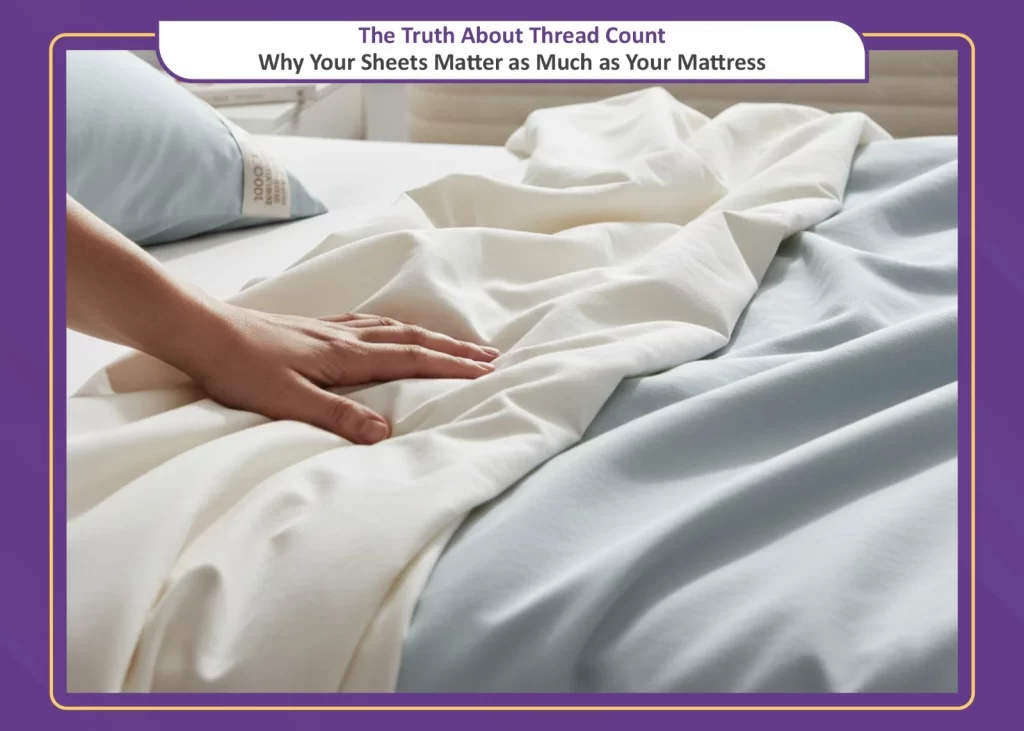
The Truth About Thread Count: Why Your Sheets Matter as Much as Your Mattress

January 27, 2026 | By admin

When sleep is discussed, the focus almost always falls on the mattress—firm or soft, foam or latex, premium or budget. Bed sheets are treated as an afterthought: washed, folded, and forgotten. Yet the fabric touching your skin for seven to eight hours each night influences sleep quality as much as the mattress itself.

At the centre of this discussion is a misunderstood metric: thread count. Long marketed as the gold standard of luxury, higher numbers are assumed to mean better sleep. The reality is more nuanced. Thread counts matters—but not in the way most people are led to believe.

What Thread Count Actually Means

Thread count is the number of horizontal and vertical threads that is woven into one square inch of fabric. In theory, a higher thread count indicates a tighter weave and a smoother surface. However, beyond a certain point, higher numbers often reflect clever manufacturing techniques rather than superior quality.

Sheets with extremely high thread counts—800, 1000, or even more—are frequently made using multi-ply yarns. This means multiple thinner threads are twisted together and counted as separate threads, inflating the number without improving comfort or durability. In many cases, these sheets are heavier, less breathable, and more prone to trapping heat.

For most natural fibres, particularly cotton, the sweet spot lies between 300 and 500 thread count. Within this range, the fabric remains soft, breathable, durable, and comfortable against the skin.

Comfort Begins at Skin Level

Your mattress supports your body, but your sheets interact with your nervous system. Skin is a sensory organ, highly responsive to texture, temperature, and friction. Rough, stiff, or poorly finished sheets can trigger micro-irritations that disrupt relaxation and delay sleep onset—even if you do not consciously register discomfort.

High-quality sheets feel smooth and this subtle comfort matters. Sleep is not only about falling asleep; it is about staying asleep without unnecessary awakenings.

Sheets made from long-staple cotton, bamboo, linen, or high-quality blends tend to soften over time rather than degrade. This creates a consistent, predictable sleep surface that your body learns to trust.

Hygiene: The Invisible Role of Sheets

Fabric quality and weave determine how well sheets clean and dry. Breathable fabrics with balanced thread count allow moisture to evaporate, limiting microbial growth. Dense, inferior weaves retain heat and humidity—even after washing.

For people with sensitive skin, allergies, acne, or respiratory issues, this matters greatly. Clean, breathable sheets are not a luxury; they are a health essential.

Temperature Regulation and Sleep Quality

Body temperature naturally drops during sleep. Sheets that interfere with this process can lead to restless nights, night sweats, and frequent awakenings. This is where thread count, fibre type, and weave intersect.

Contrary to popular belief, higher thread count does not equal better temperature regulation. In fact, very dense weaves restrict airflow. Breathability comes from fibre quality and weave structure, not sheer thread volume.

Aesthetics and Psychological Comfort

Sleep is not purely physical. The bedroom’s visual and tactile environment shapes how quickly the mind unwinds. Well-fitted, colour-coordinated, and calming sheets create a sense of order and comfort.

Crisp sheets signal cleanliness and care. Wrinkled, ill-fitting, or faded bedding creates subtle mental distraction, making the bed feel less inviting over time. A well-made bed is not about perfection—it is about psychological readiness for rest.

Why Sheets Deserve Equal Attention

A premium mattress paired with poor-quality sheets is an incomplete sleep system. Sheets influence comfort, hygiene, temperature regulation, and mental relaxation—every night, without exception.

Thread count should be seen as a guideline, not a goal. Fiber quality, weave type, breathability, and finish matter more than inflated numbers on packaging.

Leave a Reply

Your email address will not be published. Required fields are marked *