
January 27, 2026 | By admin
You go to bed on time. You avoid caffeine late in the evening. Your phone is face down, notifications silenced. Yet sleep refuses to arrive—or worse, it arrives briefly and abandons you at 3:00 a.m., leaving you staring into the dark. By morning, the question is unavoidable: Is this insomnia, or is my mattress undermining my sleep?
The distinction is more important than most people realize. Insomnia is a clinical sleep disorder that typically requires behavioural, psychological, or medical intervention. A poor mattress, by contrast, is a physical problem—one that can quietly erode sleep quality, mood, focus, and overall health. Confusing one for the other often leads to unnecessary anxiety and prolonged sleep deprivation.
The difference begins with understanding how sleep actually works.
What Insomnia Really Looks Like
Insomnia is not simply “poor sleep.” Clinically, it is defined by persistent difficulty falling asleep, staying asleep, or waking too early—despite adequate opportunity and conditions for sleep—at least three nights a week for several weeks or longer.
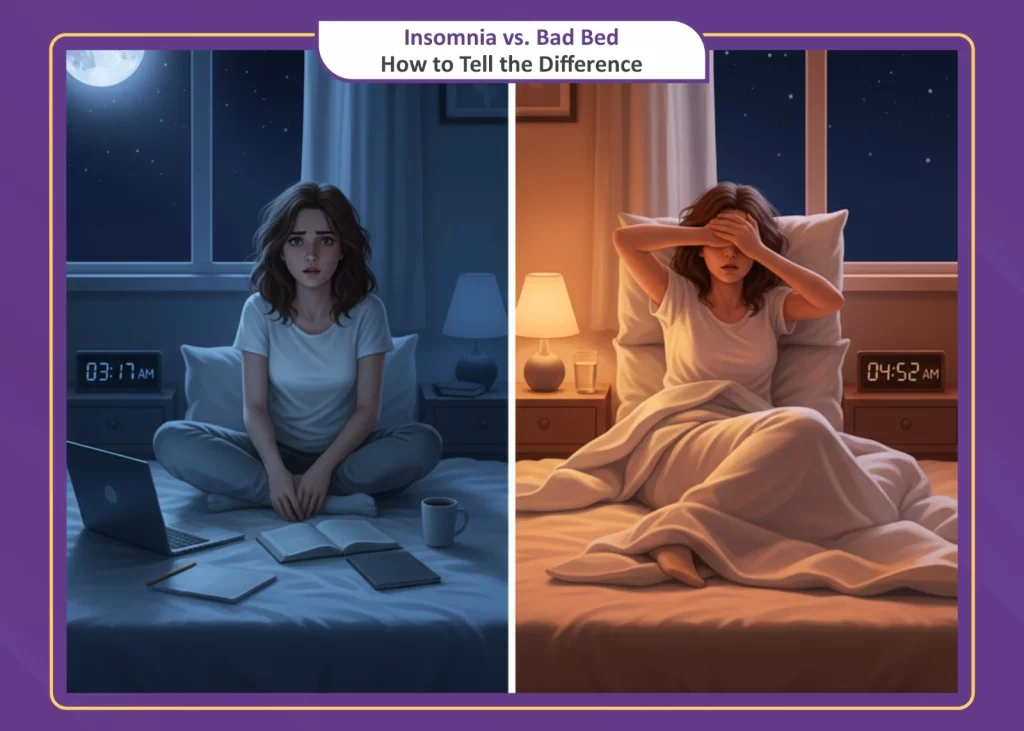
The hallmark of insomnia is mental hyperarousal. People with insomnia often describe a racing mind, excessive worry, or an inability to “switch off,” even when physically tired. Sleep feels elusive regardless of where they sleep—home, hotel, or another person’s bed.
Common signs include:
Insomnia is often linked to stress, anxiety, depression, hormonal changes, or long-term lifestyle patterns. Importantly, people with true insomnia usually report that changing the bed or mattress does not significantly improve their sleep.
What a Bad Mattress Looks Like
A bad mattress produces a very different pattern of sleep disruption. The brain may be ready to sleep, but the body is not supported properly. This creates repeated micro-awakenings that fragment sleep without the sleeper always realizing why.
The telltale sign is physical discomfort.
People struggling with mattress-related sleep problems often report:
Unlike insomnia, mattress-related sleep disruption is situational. The sleep problem is tied to where you sleep, not whether your mind can sleep.
Another clue lies in timing. If you fall asleep relatively quickly but wake up sore, stiff, or unrested, the issue is more likely mechanical than neurological. A mattress that is too soft, too firm, uneven, sagging, or poorly matched to your body type can prevent the spine from maintaining a neutral position throughout the night.
The Overlap—and the Confusion
The confusion arises because prolonged poor sleep from a bad mattress can eventually create insomnia-like symptoms. Repeated nights of discomfort condition the brain to associate bed with frustration. Over time, the mind becomes alert the moment the lights go off, even if the original problem was physical.
This is why many people incorrectly self-diagnose insomnia when the root cause is environmental.
Why the Difference Matters
Treating insomnia with sleeping pills or supplements when the problem is a bad mattress is ineffective and potentially harmful. Conversely, investing in an expensive mattress will not resolve insomnia rooted in anxiety, stress, or circadian disruption.
Sleep quality affects emotional regulation, decision-making, productivity, and interpersonal relationships. Chronic sleep deprivation—regardless of cause—makes people irritable, reactive, and cognitively slower. Correct diagnosis is the first step toward meaningful improvement.
Leave a Reply