
December 19, 2025 | By admin
Orthopaedic mattresses are engineered with a single, clear objective: to provide optimal spinal alignment, pressure relief, and long-term musculoskeletal support. Unlike conventional mattresses that prioritise surface softness or visual appeal, orthopaedic mattress design follows a clinically informed approach where biomechanics, material science, and durability standards intersect. Understanding how orthopaedic mattresses are made offers valuable insight into why they are widely recommended by healthcare professionals and increasingly chosen by consumers focused on spinal health.
Design Philosophy: Support Before Comfort
Designers, engineers, and sleep specialists collaborate to determine the precise balance between firmness and contouring required to maintain a neutral spine.
Orthopaedic Mattress Core Structure Engineering
The core of the mattress is responsible for weight distribution, posture correction, and long-term durability.
Manufacturers typically engineer the core using high-density foam, individually pocketed springs, or hybrid systems that combine both technologies. High-density foam cores are selected for their ability to resist sagging while providing uniform support across the sleeping surface. Foam density is precisely calculated to maintain firmness consistency over years of use.
In spring-based orthopaedic mattresses, individually pocketed coils replace traditional interconnected springs. Each coil responds independently to pressure, enhancing spinal alignment and reducing motion transfer. Coil gauge, height, and tension are carefully engineered to deliver firmer lumbar support while allowing controlled flexibility in the shoulder and leg zones.
Zoning for Targeted Spinal Support
A defining characteristic of advanced orthopaedic mattress design is ergonomic zoning. During the orthopaedic mattress manufacturing process, the mattress is divided into multiple zones—typically three, five, or seven—each tailored to support a specific part of the body.
The lumbar zone is reinforced to prevent lower back collapse, while shoulder zones allow deeper compression to relieve pressure points. This zoning is achieved through variations in foam density, spring tension, or layer thickness. Precision manufacturing equipment ensures that each zone meets strict specifications, delivering consistent performance across every mattress produced.
Comfort Layer Development
While the core provides support, comfort layers play a crucial role in pressure relief. These layers sit above the core and are designed to complement the support system without altering spinal alignment.
Materials such as memory foam, latex, and advanced pressure-relieving foams are commonly used. Memory foam layers are formulated for controlled responsiveness, preventing excessive sinkage. Latex layers add resilience, breathability, and natural resistance to allergens.
Throughout the production process, comfort layers are tested for compression resistance, recovery speed, and thermal regulation. In orthopaedic mattresses, these layers are deliberately kept thinner than those in plush mattresses to preserve the effectiveness of the orthopaedic mattress core structure.
Fabric Selection and Quilting Techniques
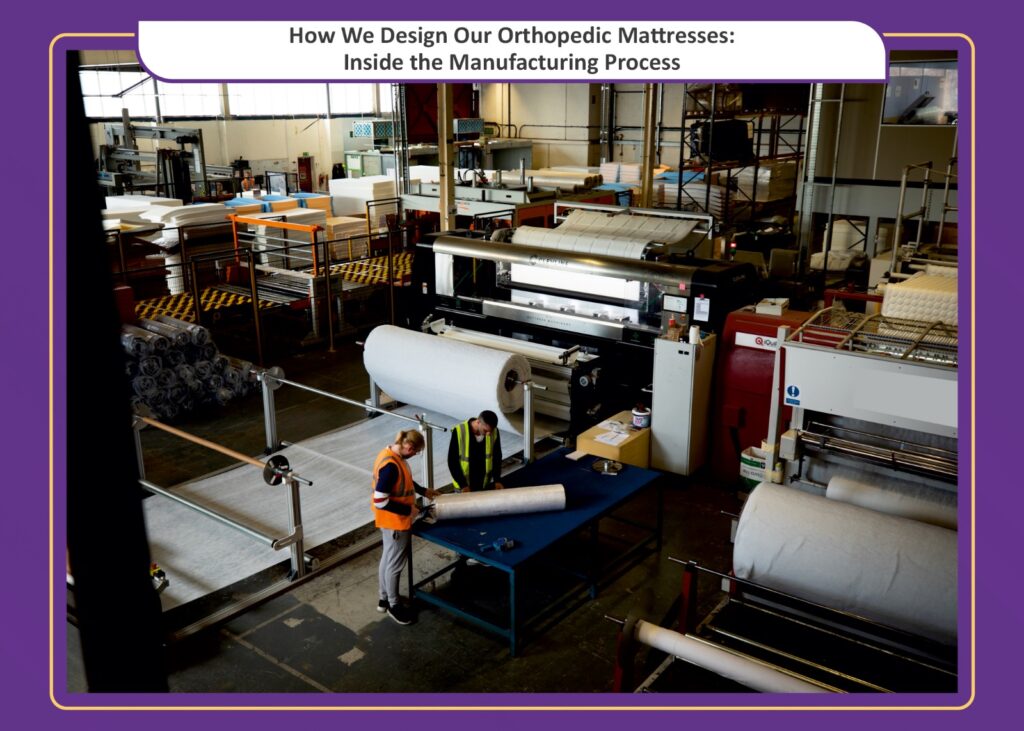
Quilting is an engineered step within the orthopaedic mattress manufacturing process. Quilting patterns are designed to enhance surface stability, regulate firmness, and prevent internal layer movement. Advanced quilting machines ensure uniform tension and long-term durability.
Quality Control
Quality control is integral to understanding how orthopaedic mattresses are made. Finished products undergo extensive testing for firmness uniformity, edge support, height accuracy, and structural resilience. Roll tests simulate years of usage, while load tests confirm weight-bearing capacity.
Final Testing and Certification
Before reaching the market, orthopaedic mattresses are evaluated against internal performance benchmarks and, in many cases, external certification standards. These assessments validate durability, material safety, and spinal support effectiveness.
Leave a Reply